Why harvest consistency drives commercial turf performance
Insight
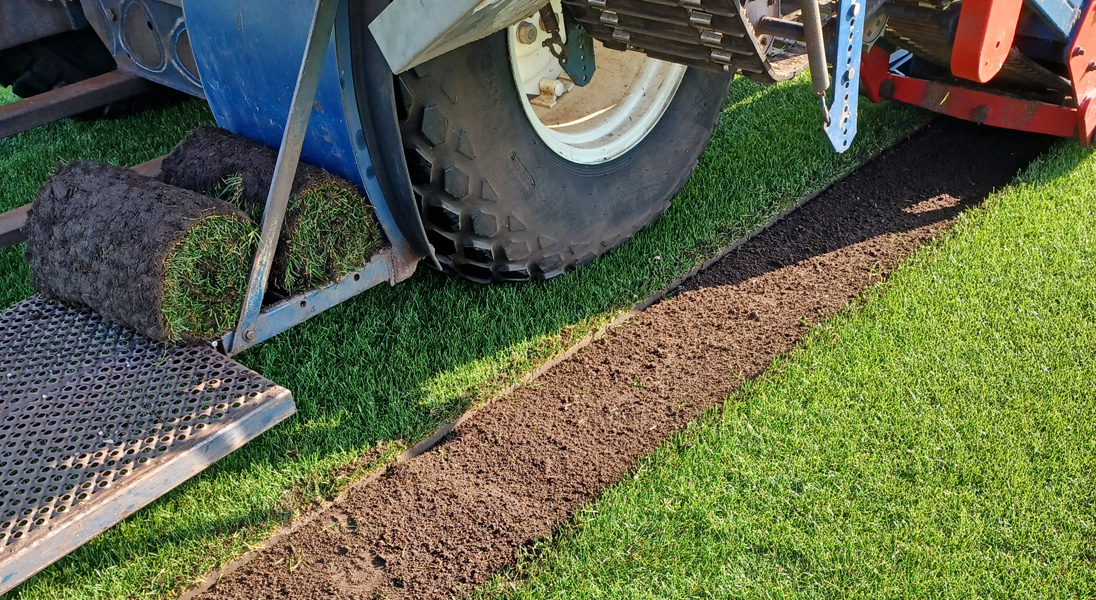
At harvest, turf crops often reveal how consistently they developed through the season.
Some fields lift cleanly with strong sod integrity and reliable handling performance. Others contain weaker areas that tear, separate or lift unevenly during harvest.
For commercial turf growers, these differences directly affect harvest efficiency, crop consistency and the reliability of the finished product.
In most cases, the cause is not a single issue late in the season. It is the cumulative effect of how consistently the crop established and developed earlier in the growing cycle.
Turf strength is built before harvest
By the time turf reaches lifting readiness, much of its structural performance has already been determined.
Root mass, rooting depth and plant density all influence how well the turf holds together during lifting, transport and handling.
Where crop development remains consistent, the turf is more likely to form a stronger and more cohesive structure across the field. This improves lifting consistency and reduces the operational variability growers often encounter during harvest.
Where development is uneven, weaker areas become increasingly visible as lifting approaches. These areas can slow harvest operations, reduce handling consistency and affect the uniformity of the final product.
Root systems influence harvest reliability
Root development plays a central role in how reliably turf performs commercially at lifting.
As root systems expand, they help bind the profile together and support the structural strength required for clean harvesting and transport.
Stronger root systems are associated with:
- improved sod cohesion
- more reliable lifting performance
- greater consistency across harvested rolls
- reduced weak areas within the crop
Where rooting is less developed, turf becomes more vulnerable to tearing, separation and inconsistent handling during harvest operations.
Across larger production areas, even relatively small differences in turf strength can influence harvest efficiency and operational reliability.
Variability becomes commercially visible at harvest
Small differences across the field are not always obvious during early growth.
However, as the crop approaches harvest, variation in rooting and turf density becomes increasingly visible operationally and commercially.
Some areas lift cleanly and consistently. Others show weaker knit, reduced strength or less reliable handling performance.
This can affect:
- lifting efficiency
- harvest scheduling
- product consistency
- operational predictability
- finished crop quality
For commercial turf growers, these factors influence both production efficiency and the consistency of saleable product leaving the farm.
Why later management cannot fully correct weaker areas
Later season nutrition and irrigation remain important for maintaining crop condition.
However, once weaker rooting and uneven crop structure become established, they are difficult to fully correct before lifting.
Earlier developing areas usually continue progressing more strongly through the season, while weaker areas often remain behind structurally.
This is why commercial turf programmes increasingly focus on establishment quality and early root development. The objective is not simply producing growth but producing a crop that performs more consistently at harvest.
Building stronger commercial turf crops
Commercial turf production depends on producing a crop that lifts consistently, handles reliably and meets customer expectations across the harvested area.
Programmes that support rooting, sustained plant growth and crop consistency through the season are increasingly being used to improve harvest reliability and operational performance.
Within commercial turf systems, the Maxstim Turf programme is used to support root mass, nutrient efficiency and sustained plant performance through the growing cycle.
The focus is not simply faster growth. It is helping growers produce stronger, more consistent turf with more reliable lifting performance and greater harvest predictability.
Speak to the Maxstim team about your turf programme.
Tim Cannon
Email: tim.cannon@maxstim.com
Mobile: 07884 586191
Phil Kingsmill
Email: phil.kingsmill@maxstim.com
Mobile: 07860 269996
Leanne Taylor
Email: leanne.taylor@maxstim.com
Mobile: 07552 097554
Tony Kelly
Email: tony.kelly@maxstim.com
Mobile: 07974 435417