Turf – How small differences become field-wide variability
Insight
How early variation becomes field-wide inconsistency
Variation introduced at establishment does not correct as the crop develops. Instead, it is carried forward and reinforced through growth, becoming more visible and more difficult to manage over time.
This article focuses on how early differences between plants develop into field-wide variability and why that process is difficult to reverse.
Growth does not re-align once plants diverge
Once plants begin developing from different starting points, their growth does not converge. Plants that establish earlier or more strongly continue to build advantage through larger root systems and greater leaf area, supporting higher and more sustained growth rates.
Plants that establish later or develop more slowly do not catch up. They access fewer resources and expand more gradually, remaining behind in development relative to neighbouring plants. Over time, this creates a widening gap between plants across the sward.
Root development reinforces variability
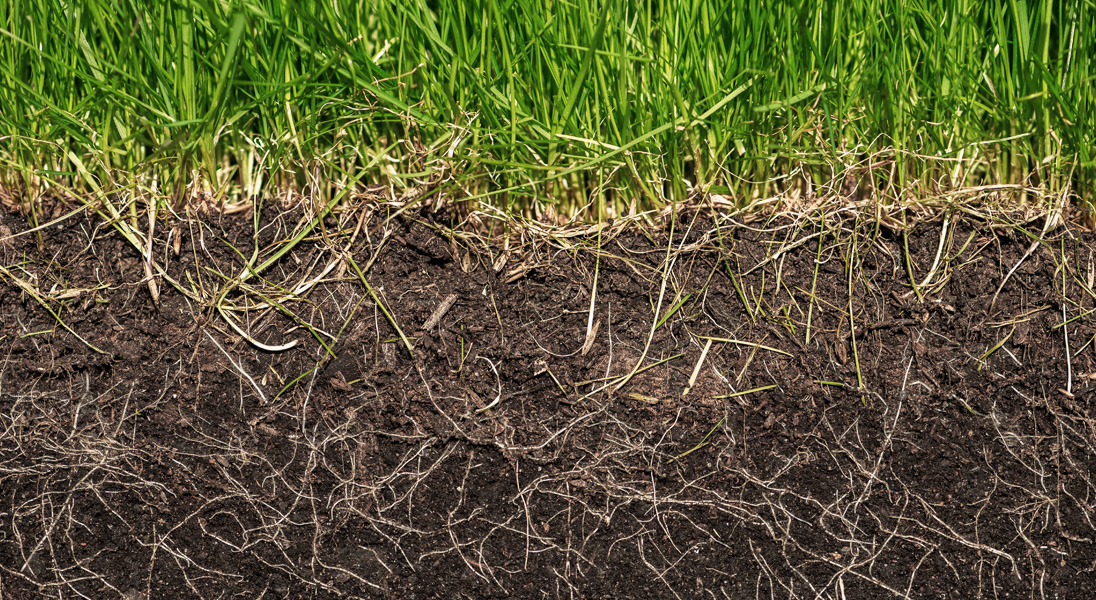
Root systems play a central role in how variability develops. Where root growth is stronger, access to water and nutrients is more consistent, allowing plants to maintain stable growth.
Where root systems are less developed, resource access is more limited and plants respond less consistently to the same conditions. This means early differences are not neutral; they are reinforced through how effectively each plant can acquire resources.
In turf systems, greater root mass and density are associated with more even development across the sward. This relationship between early root development and overall crop consistency is explored further in Maxstim’s turf work:
ExploreCompetition increases separation between plants
As the crop develops, competition between plants becomes more pronounced. Plants with an early or structural advantage are able to intercept more light and access resources more effectively, allowing them to maintain their lead.
Plants that are already behind develop under increasing competitive pressure. Their ability to expand both above and below ground is more restricted, which further separates them from stronger neighbours. This competitive dynamic amplifies the differences already present in the crop.
Variation becomes visible across the sward
As the crop approaches full cover, these differences become increasingly apparent. Variation is expressed through differences in turf density, colour, vigour and overall surface consistency.
At this stage, variability is no longer subtle. It becomes a visible and defining characteristic of the sward, reflecting how evenly the crop has developed.
Variability develops as a cumulative process
Variation is not introduced at a single point. It develops as a cumulative process through the crop cycle.
Small differences established at emergence are reinforced through root development and amplified through competition as growth progresses. These differences are then expressed in the structure of the sward.
Once this process is underway, variability becomes difficult to correct through later management.
Why this matters for turf consistency
Turf quality reflects how evenly plants develop across the field. Where early development is aligned, the sward maintains a more consistent structure. Where variation is introduced early, it increases over time and becomes embedded in the crop.
Improving consistency therefore depends on limiting early differences before they are reinforced through growth.
In turf systems, more consistent early development can contribute to the sward reaching lifting readiness more uniformly.
Supporting consistent early development
Within turf management programmes, approaches that support early plant development and root growth are often used to improve establishment consistency. This can include the use of biostimulant inputs, such as Maxstim Turf products, applied alongside standard agronomic practice.
Looking to improve turf consistency? We can help.
Tim Cannon
Email: tim.cannon@maxstim.com
Mobile: 07884 586191
Phil Kingsmill
Email: phil.kingsmill@maxstim.com
Mobile: 07860 269996
Leanne Taylor
Email: leanne.taylor@maxstim.com
Mobile: 07552 097554
Tony Kelly
Email: tony.kelly@maxstim.com
Mobile: 07974 435417