Emergence uniformity and its influence on marketable potato yield
Conocimiento
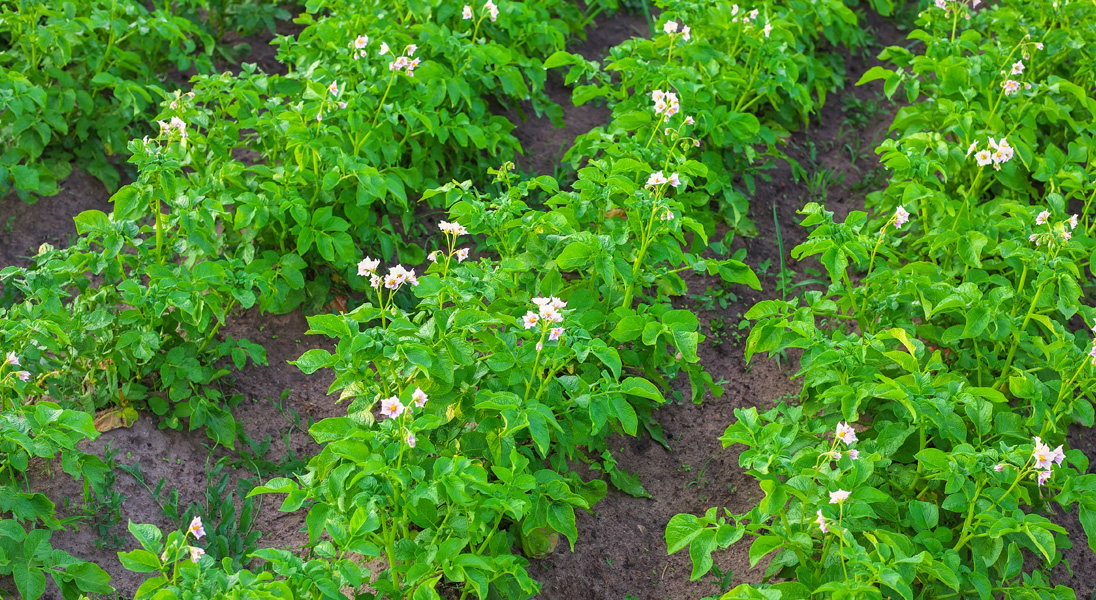
At establishment, potato crops begin to separate.
Not in total plant numbers, but in timing, structure and development rate. These early differences are often subtle, yet even a few days between plants emerging can introduce variation across the field that persists through the season.
Emergence sets the starting point
Emergence defines the starting point for stem development, canopy formation and tuber initiation timing.
Where plants emerge together, these processes progress in step and the crop develops more evenly. Where emergence is spread, plants move through growth stages at different rates and variation becomes embedded within the crop.
What uneven emergence leads to
When plants emerge at different times, they do not compete equally.
Earlier plants develop canopy sooner, intercept more light and establish stronger root systems. Later plants remain smaller, intercept less radiation and contribute less to final yield.
This creates structural variability within the crop, not just visual differences across the field.
How this affects yield and grading
Soil biology influences what is available.Variation introduced early in the crop cycle carries through to harvest.
Differences in development influence stem numbers per plant, tuber initiation timing and bulking, which in turn affect tuber size distribution and grading. Where crops develop unevenly, a wider spread of tuber sizes is more likely, reducing the proportion that falls into marketable categories.
What this looks like in the field
Crops that develop more evenly tend to produce a tighter range of tuber sizes, more consistent canopy structure and a more predictable grading profile at harvest.
Where variation is present, differences in plant development are reflected in tuber size spread, with a higher proportion falling outside market specifications.
What influences emergence uniformity
At establishment, several factors interact.
Soil conditions at planting, moisture and temperature all affect the rate and spread of emergence. Seed condition, planting depth consistency and early stress exposure also influence how evenly plants establish across the field.
Why this stage matters more than it appears
Emergence is often treated as a checkpoint. In practice, it defines crop structure.
Once variation is introduced, it is difficult to correct and continues to influence canopy development, tuber set and final grading. By the time differences are visible later in the season, the underlying variation has already been established.
Key takeaways for growers
- Emergence timing influences how evenly crops develop through the season
- Early variation can carry through to yield and grading outcomes
- Tuber size distribution is shaped early in the crop cycle
- More even crops tend to produce more predictable marketable yield
Supporting trial data
Field trials across multiple seasons, varieties and sites have consistently shown improvements in yield, tuber size distribution and marketable output where crops develop more evenly.
For full trial methodology and results, including multi-year commercial data, read the full dataset here:
Full datasetKickstart your crop’s success from day one. Connect with our team today to discuss trialling Maxstim on your potato crops.”
Tim Cannon
Correo electrónico: tim.cannon@maxstim.com
Móvil: 07884 586191
Phil Kingsmill
Correo electrónico: phil.kingsmill@maxstim.com
Móvil: 07860 269996
Leanne Taylor
Email: leanne.taylor@maxstim.com
Mobile: 07552 097554
Tony Kelly
Correo electrónico: tony.kelly@maxstim.com
Móvil: 07974 435417