Strawberry Trial in Kenya: Assessing the Impact of Maxstim Agriculture+
Datos del ensayo
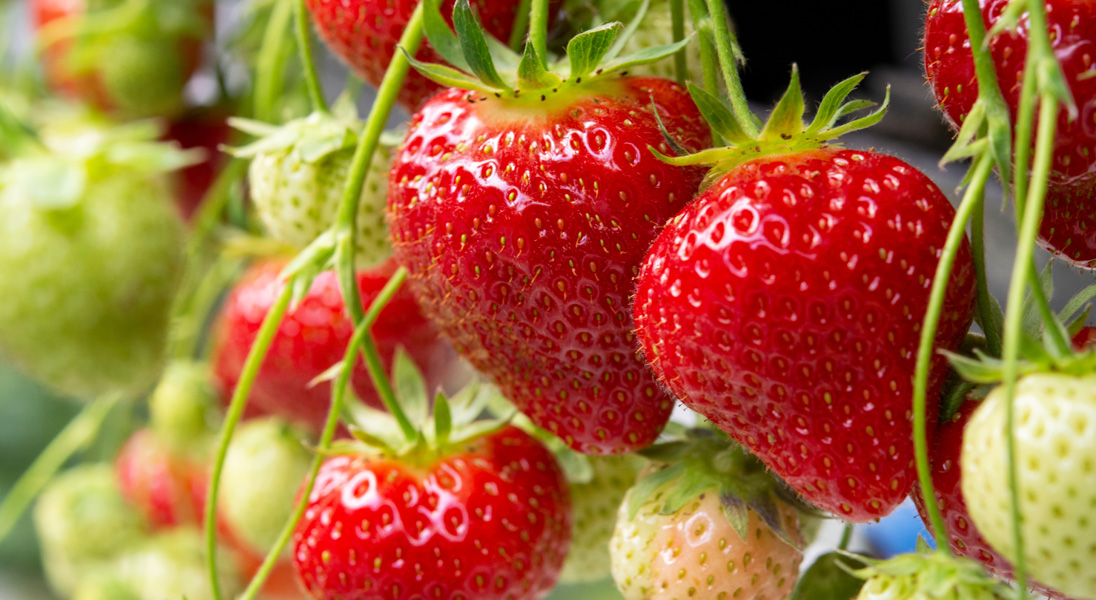
Field trials play an essential role in understanding how biostimulant technologies perform under real agricultural conditions.
A recent assessment in Kenya evaluated the impact of Maxstim Agriculture+ on strawberry crop performance by comparing treated and untreated areas under the same growing conditions.
The trial focused on measuring plant vigour, flower and fruit formation, and overall productivity to understand how the treatment influenced crop development.
Understanding Maxstim Agriculture+
Maxstim Agriculture+ is a scientifically formulated complex biostimulant designed to support crop yield and quality while helping growers improve input efficiency.
Its complex formulation allows it to influence a wide range of crops by stimulating natural plant processes that support stronger growth and improved root development.
Maxstim formulations contain bioactive flavonoids, naturally occurring plant compounds known for their antioxidant and protective properties. These compounds influence key plant processes including chlorophyll production, root development and nutrient uptake.
Early application of Maxstim Agriculture+ activates important metabolic processes within the plant, helping crops use nutrients more efficiently and maintain consistent growth.
By supporting these physiological responses, plants become more robust and better able to defend against and recover from the effects of abiotic and biotic stresses throughout the growing cycle.
Trial Objectives
The Kenyan strawberry trial was designed to assess three key factors:
- The vigour of treated plants compared with untreated plants
- The product’s impact on flower and fruit formation
- The productivity of treated areas compared with untreated areas
Both treated and untreated plots covered the same planted area of 0.18 hectares, allowing a direct comparison of crop performance.
Observed Plant Development
Clear differences were recorded between treated and untreated plants throughout the growing period.
Crop vigour
Treated plants demonstrated vigorous growth with dark green glossy leaves, while untreated plants were less vigorous and had paler foliage.
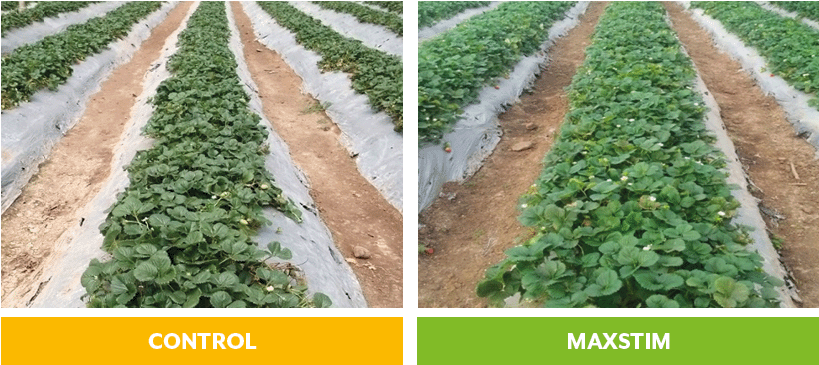
Higher chlorophyll levels are often associated with stronger plant growth and improved photosynthetic activity, supporting overall crop performance.
Root development
Root systems in the treated area were observed to be dense and longer, compared with shorter and less compact roots in untreated plants.
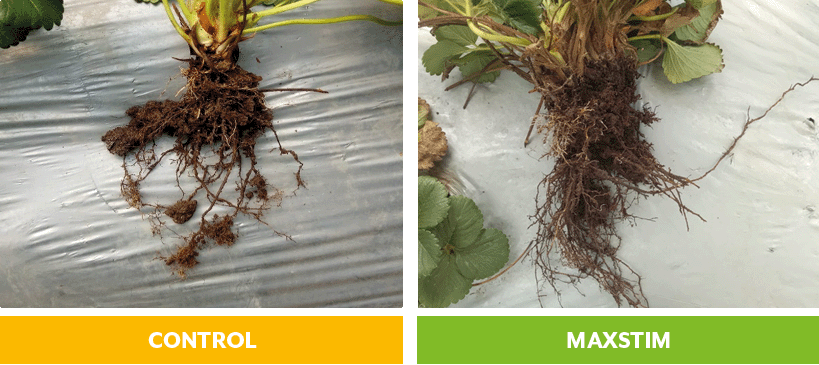
Strong root development plays a key role in supporting nutrient and water uptake, helping plants maintain consistent growth throughout the season.
Flower and fruit formation
The treated crop also produced more flowers and fruit, while untreated plants developed fewer flowers and therefore fewer fruits.
These observations indicate that the treated crop maintained stronger plant development during key reproductive stages.
Yield Comparison
Yield data from the two plots highlighted a clear difference in productivity.

Overall, the treated crop produced significantly more fruit from the same planted area.
The trial results showed that Maxstim Agriculture+ increased strawberry yield by 32%.
Supporting Plant Performance
Biostimulants are designed to support plant physiological processes that influence growth and resilience.
Maxstim treatments are formulated to help plants:
- Stimulate root development
- Enhance nutrient uptake
- Support water uptake
- Maintain plant vigour under environmental stress
By strengthening these biological processes, crops are better able to sustain growth, maintain plant health and produce consistent yields.
What This Means for Growers
The Kenyan strawberry trial demonstrated measurable differences between treated and untreated crops, including:
- Stronger plant vigour
- Darker green foliage
- Improved root development
- Increased flower and fruit formation
- Higher overall yields
Trials such as this help demonstrate how science-led biostimulant technologies can support crop performance in real field conditions.
As growers look for ways to improve productivity while maintaining soil health and sustainable practices, biostimulants are becoming an increasingly important part of modern crop management strategies.
Más información
Maxstim continues to generate field data across a wide range of crops and growing environments to better understand how plant biostimulants influence crop performance.
Explore more science and trial data from Maxstim on our insights page.
Contact a member of our team today to discuss how a Maxstim field trial could benefit you and your crop.
Tim Cannon
Correo electrónico: tim.cannon@maxstim.com
Móvil: 07884 586191
Phil Kingsmill
Correo electrónico: phil.kingsmill@maxstim.com
Móvil: 07860 269996
Leanne Taylor
Email: leanne.taylor@maxstim.com
Mobile: 07552 097554
Tony Kelly
Correo electrónico: tony.kelly@maxstim.com
Móvil: 07974 435417